Time: Wednesdays @ 7:00 PM
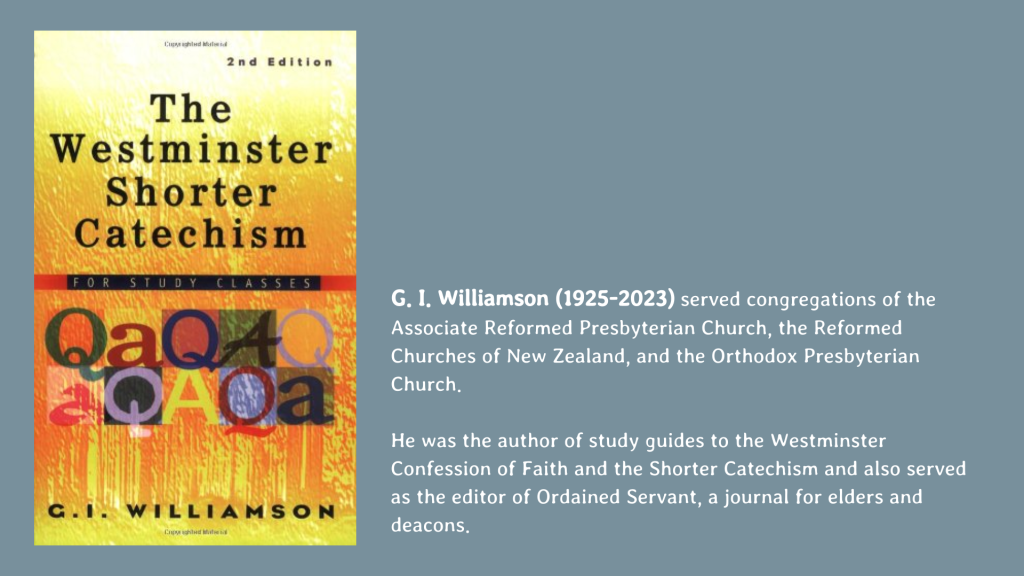
Study: Westminster Shorter Catechism
Attendees: Anyone can come and study together, each class is separate from the other, so you can join at any time too.
Format: Question by question analysis and discussion followed by a time of prayer.
Benefits: A systematic understanding of God’s Word. Never fall from the truth!
Why the Catechism?
Adapted from here.
“The Westminster Confession of Faith, drawn up in the 1640s by an assembly of 151 theologians at Westminster Abbey, is the standard of doctrine for the Church of Scotland and many Presbyterian churches throughout the world.”
“The Westminster Confession of Faith is a systematic exposition of Calvinism, written from a Puritan viewpoint. It was originally drafted to reform the Church of England and to unify the various Christian sects in England at that time. The document addresses doctrines such as the Trinity, the sacrificial death and resurrection of Jesus, sola scriptura, and sola fide.”
“The Westminster Assembly first convened in 1643, and the Confession was published four years later. Also at that time, the Assembly produced two other important documents, the Westminster Larger Catechism and the Westminster Shorter Catechism.”
“The Shorter Catechism contains 107 questions and answers concerning God as Creator, original sin and man’s fallen nature, Christ the Redeemer, the Ten Commandments, baptism, Holy Communion, and the Lord’s Prayer. The structure of the Westminster Catechism follows the earlier Heidelberg Catechism (1562) of the continental Reformed churches.”
“The first and most famous of the questions in the Shorter Catechism asks, “What is the chief end of man?” The answer is “Man’s chief end is to glorify God, and to enjoy him forever.” The Westminster Larger Catechism can be found here, and the Shorter Catechism here.”
“The Westminster Confession of Faith is considered by many to be the best statement of systematic theology ever framed by the Christian church. As an attempt to “correctly handle the word of truth” (2 Timothy 2:15), the Westminster Confession of Faith has stood the test of time and remains a prime doctrinal standard for Protestants and evangelicals everywhere.”
 Chara Community